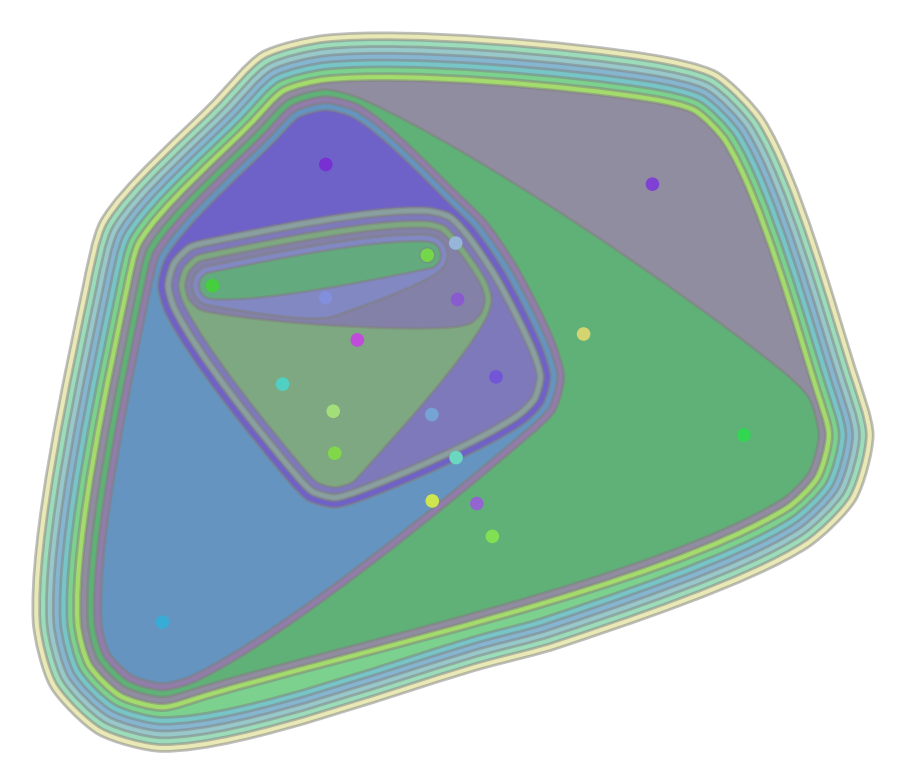
Drawing Elements
Here we demonstrate the different types of individual element that can be placed.
The hash_to_color function is a useful way to
deterministically generate colors from hashable objects.
To help with perspective or placing new items, you can call
Drawing.grid() or
Drawing.grid3d(), these will use the limits
of items placed so far thus should typically be called after.
Hint
Drawing.scale_figsize is another
useful method to call last, which scales the absolute figsize of the figure
based on the limits of items placed so far. This can be useful for generating
sequences of figures where elements are removed and added, but the scale should
remain consistent.
%config InlineBackend.figure_formats = ['retina']
import numpy as np

import robodraw
Shapes
Circles
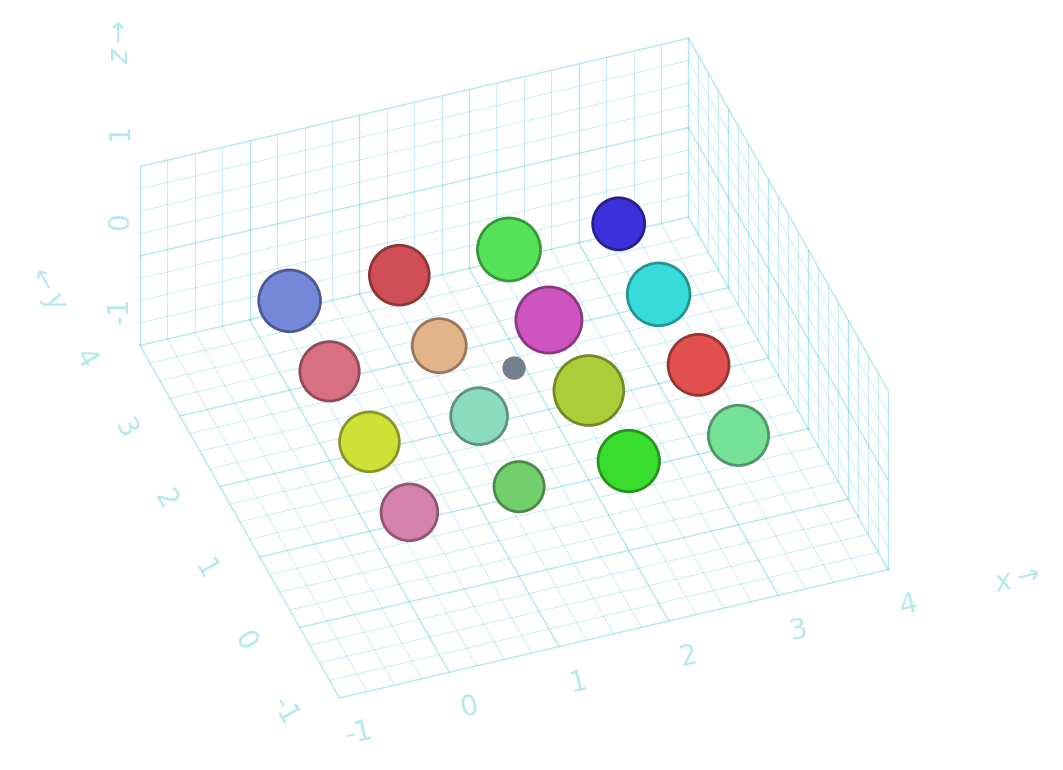
Drawing.circle draws a circle with a given
radius and center coordinates.
d = robodraw.Drawing()

coos = [(i, j, 0) for i in range(4) for j in range(4)]

for coo in coos:
    d.circle(
        coo,
        radius=np.random.uniform(0.2, 0.3),
        color=robodraw.hash_to_color(str(coo)),
    )

# dot is a simple alias circle
d.dot((1.5, 1.5, 0))

d.grid3d()
Cubes
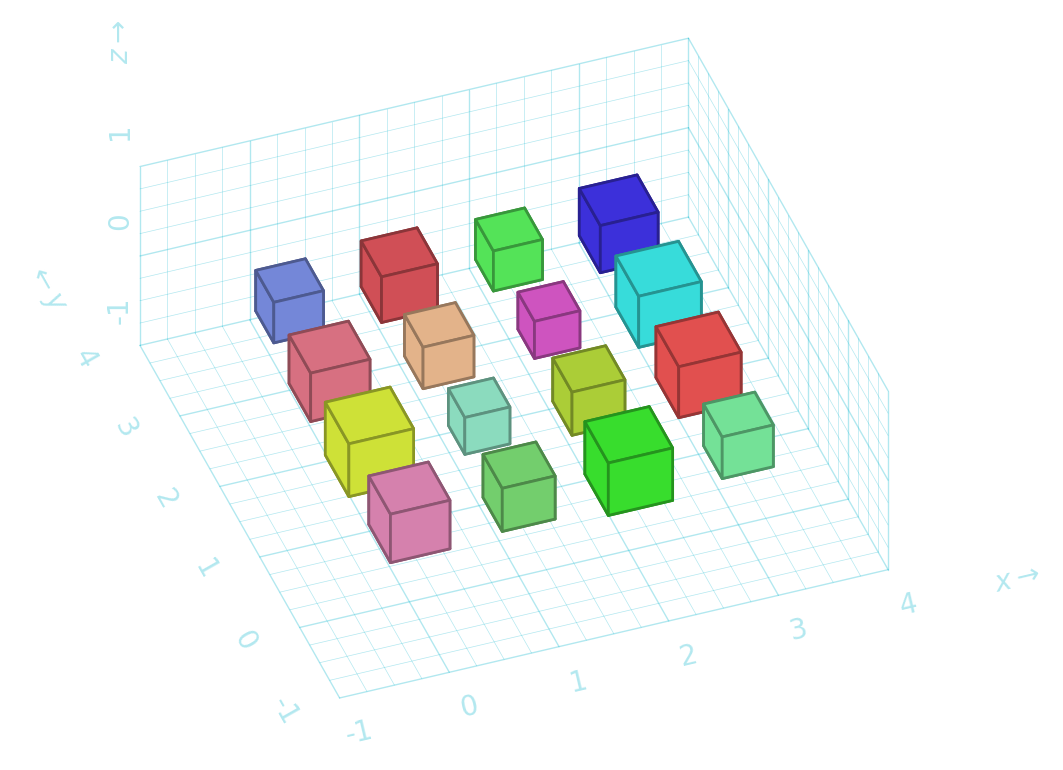
Drawing.cube draws a cube with a given
radius and center coordinates, only for 3D coordinates.
d = robodraw.Drawing()

coos = [(i, j, 0) for i in range(4) for j in range(4)]

for coo in coos:
    d.cube(
        coo,
        radius=np.random.uniform(0.2, 0.3),
        color=robodraw.hash_to_color(str(coo)),
    )

d.grid3d()
Text
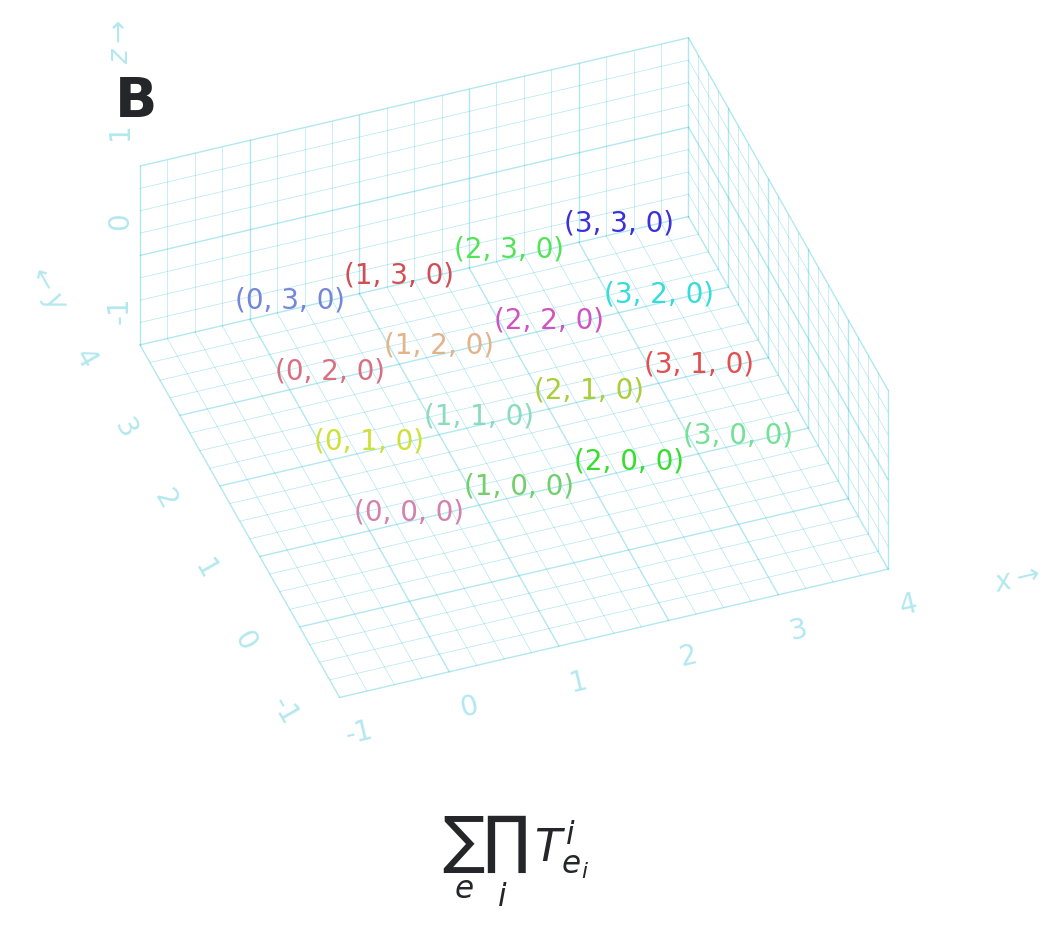
Drawing.text places text in data coordinates
(including 3D). Drawing.label_ax and
Drawing.label_fig are the same but default
to axis and figure coordinates respectively.
d = robodraw.Drawing()

coos = [(i, j, 0) for i in range(4) for j in range(4)]

for coo in coos:
    d.text(coo, str(coo), color=robodraw.hash_to_color(str(coo)))

# labels are the same but use the axes or figure coordinates
d.label_ax(0.1, 0.9, "$\\mathbf{B}$", fontsize=20)
d.label_fig(0.5, 0.0, "$\\sum_e \\prod_i ~ T^i_{e_i}$", fontsize=16)

d.grid3d()
General shapes
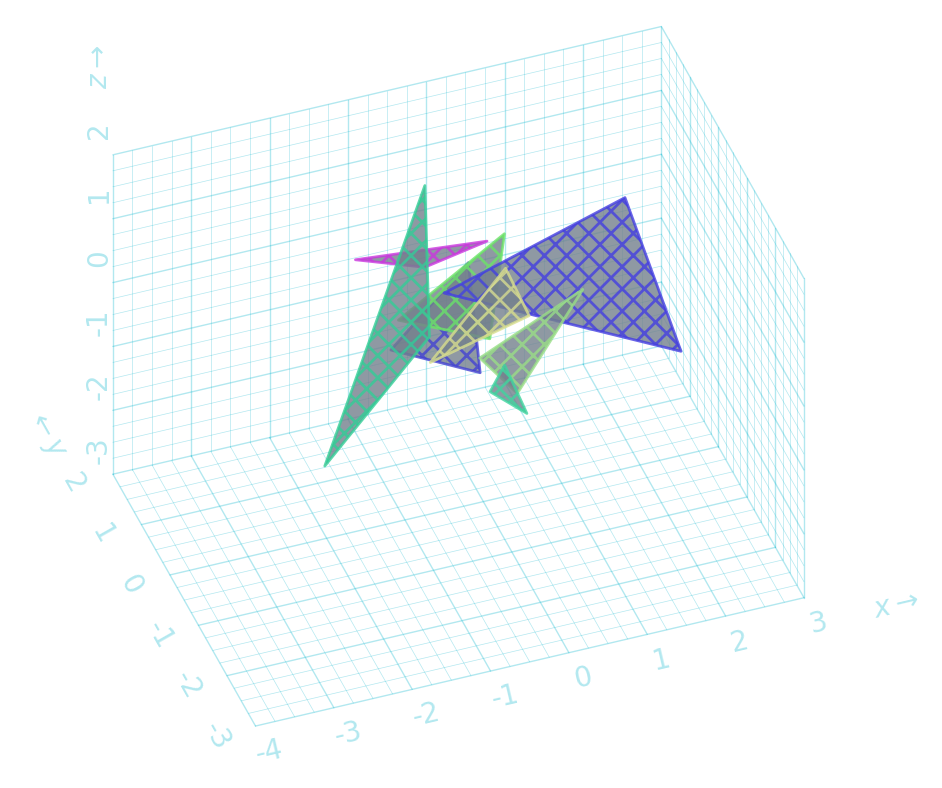
Drawing.shape draws a general filled shape
given a sequence of 2D or 3D coordinates.
d = robodraw.Drawing()

rng = np.random.default_rng(1)
pts = rng.normal(size=(8, 3, 3))

for coos in pts:
    d.shape(
        coos,
        alpha=0.8,
        hatch="XXX",
        edgecolor=robodraw.hash_to_color(str(coos)),
    )

d.grid3d()
Markers
Drawing.marker is a convenience method for
specifying the shape of a patch using a single string or integer, to yield
a regular polygon.
d = robodraw.Drawing()

for p in range(3, 10):
    d.marker((p, 0), marker=p)
    d.text((p, 0.5), f"{p}-gon")

d.grid()
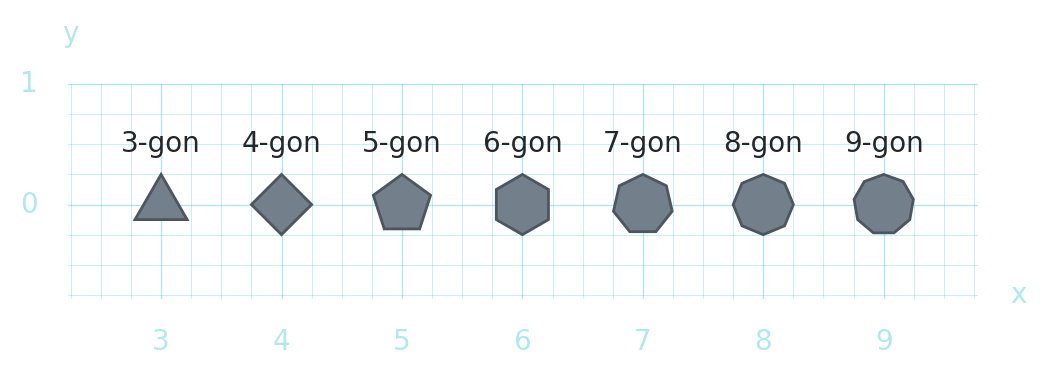
It is a wrapper around Drawing.regular_polygon with which you can also change the rotation with the orientation argument.
Stars
The other class of markers are drawn using Drawing.star, which you can call directly:
d = robodraw.Drawing()

for p in range(3, 10):
    d.star((p, 0), npoint=p)
    d.text((p, 0.5), f"#p:{p}")

d.grid()
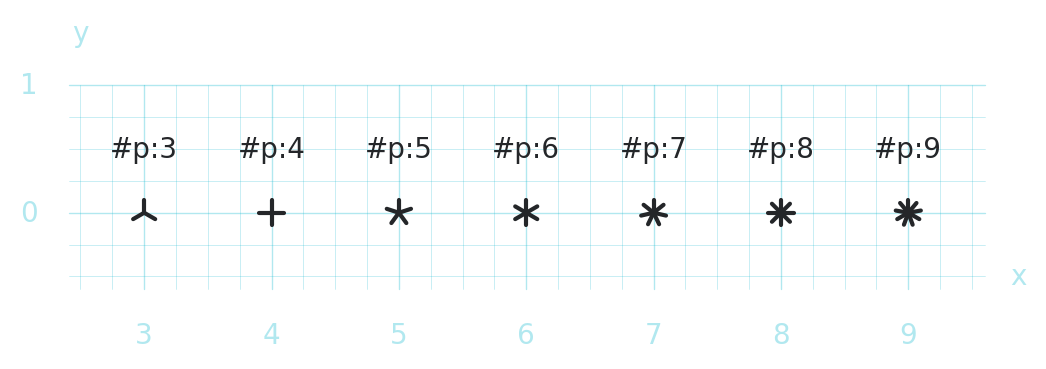
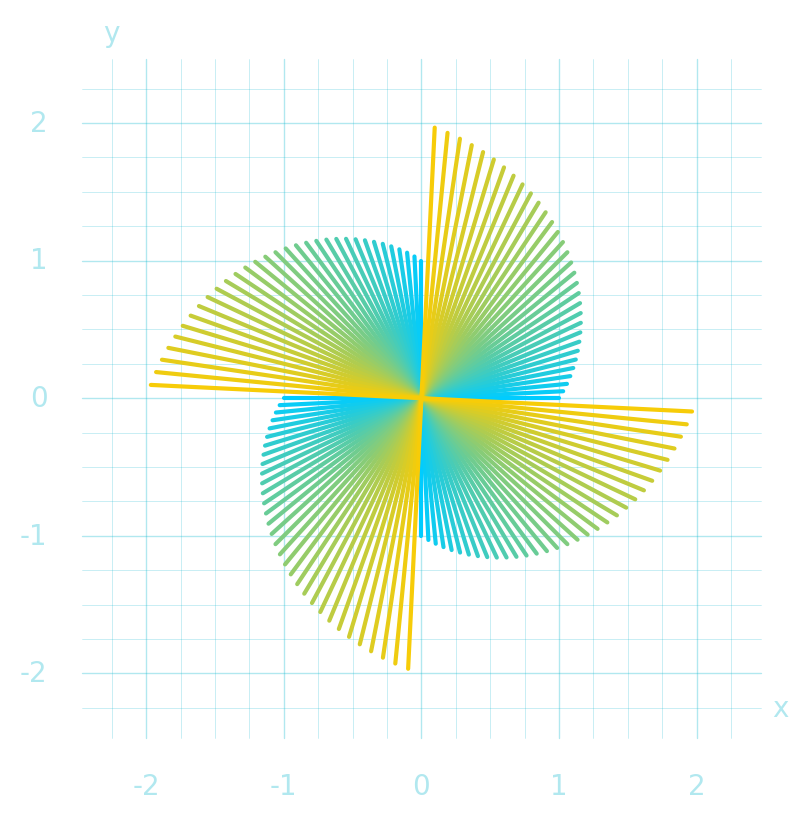
You can specify the radius (in data units) and the orientation (in radians from vertical):
d = robodraw.Drawing()

K = 32

for i in range(0, K):
    radius = 1 + i / K
    orientation = i / K * np.pi / 2
    color = (i / K, 0.8, 1 - i / K)
    d.star(
        (0, 0), npoint=4, radius=radius, orientation=orientation, color=color
    )

d.grid()
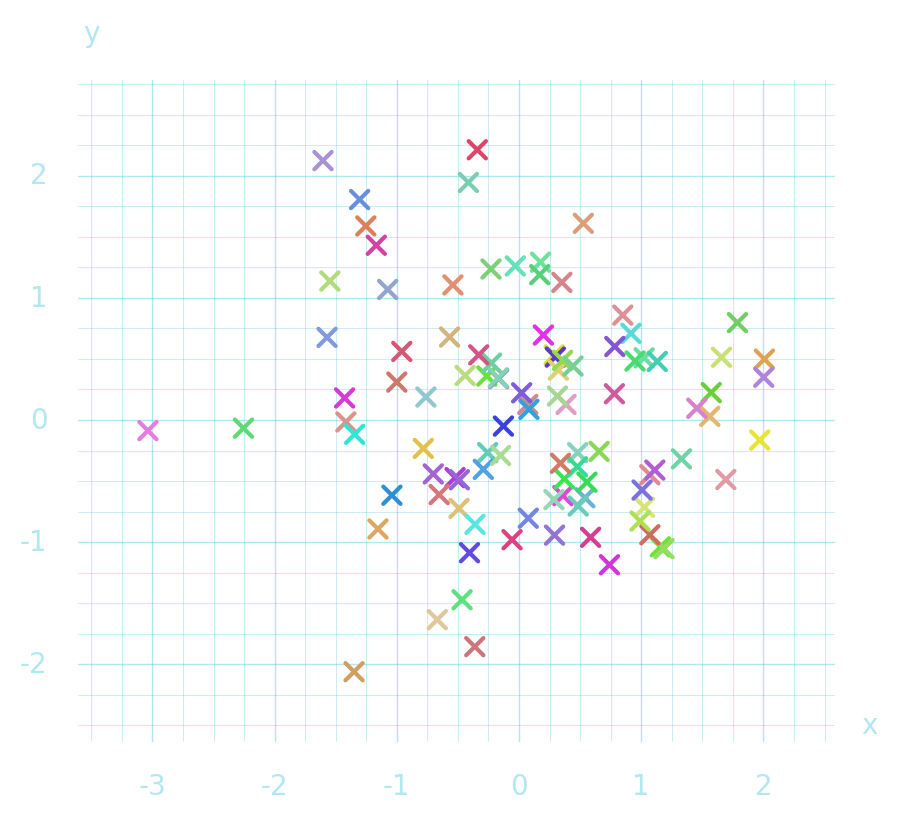
The alias Drawing.cross is shorthand for drawing a diagonal star with 4 points:
d = robodraw.Drawing()
coos = np.random.randn(100, 2)
for x, y in coos:
    d.cross((x, y), color=robodraw.hash_to_color(str((x, y))))
d.grid()
Lines and curves
Lines
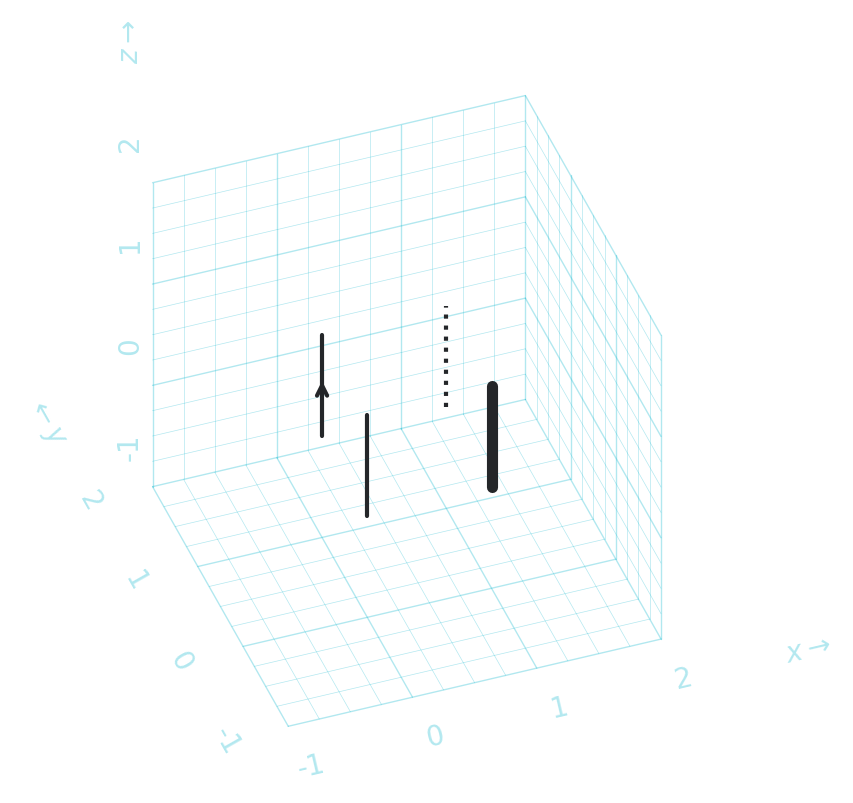
The basic method for drawing lines between a pair of 2D or 3d points is
Drawing.line.
d = robodraw.Drawing()

d.line((0, 0, 0), (0, 0, 1))
d.line((0, 1, 0), (0, 1, 1), arrowhead=True)
d.line((1, 0, 0), (1, 0, 1), linewidth=4)
d.line((1, 1, 0), (1, 1, 1), linestyle=":")

d.grid3d()
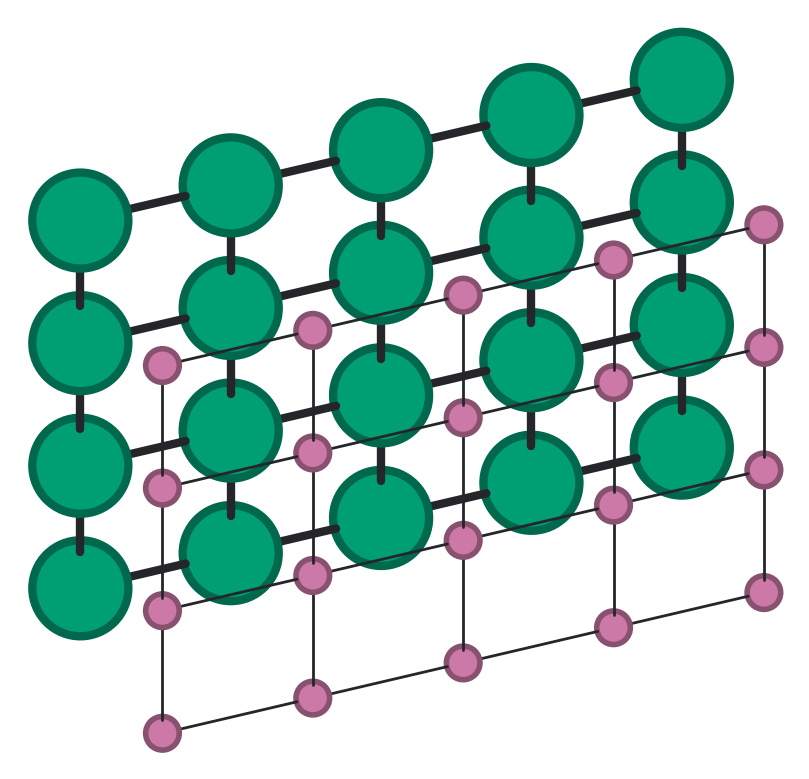
When drawing lattice bonds it can be useful to shorten the lines somewhat for visual effect.
The
stretchkwarg applies an overall relative stretch to the whole line.The
shortenkwarg makes the line stop an absolute amount shorter, a tuple can be used to control start and end separately.
By setting shorten to the radius of circles drawn, the lines connect exactly to the circle edge:
d = robodraw.Drawing()

r = 0.15

edges = [((i, j), (i, j + 1)) for i in range(5) for j in range(3)] + [
    ((i, j), (i + 1, j)) for i in range(4) for j in range(4)
]
sites = {site for edge in edges for site in edge}

for i, j in sites:
    d.circle(
        (i, 0, j),
        radius=2.0 * r,
        color=robodraw.get_color("green"),
        linewidth=3,
    )
    d.circle(
        (i, -1.5, j),
        radius=0.7 * r,
        color=robodraw.get_color("pink"),
        linewidth=2,
    )
for (ia, ja), (ib, jb) in edges:
    d.line((ia, 0, ja), (ib, 0, jb), shorten=2.0 * r, linewidth=3)
    d.line((ia, -1.5, ja), (ib, -1.5, jb), shorten=0.7 * r, linewidth=1)
Arrows and labels
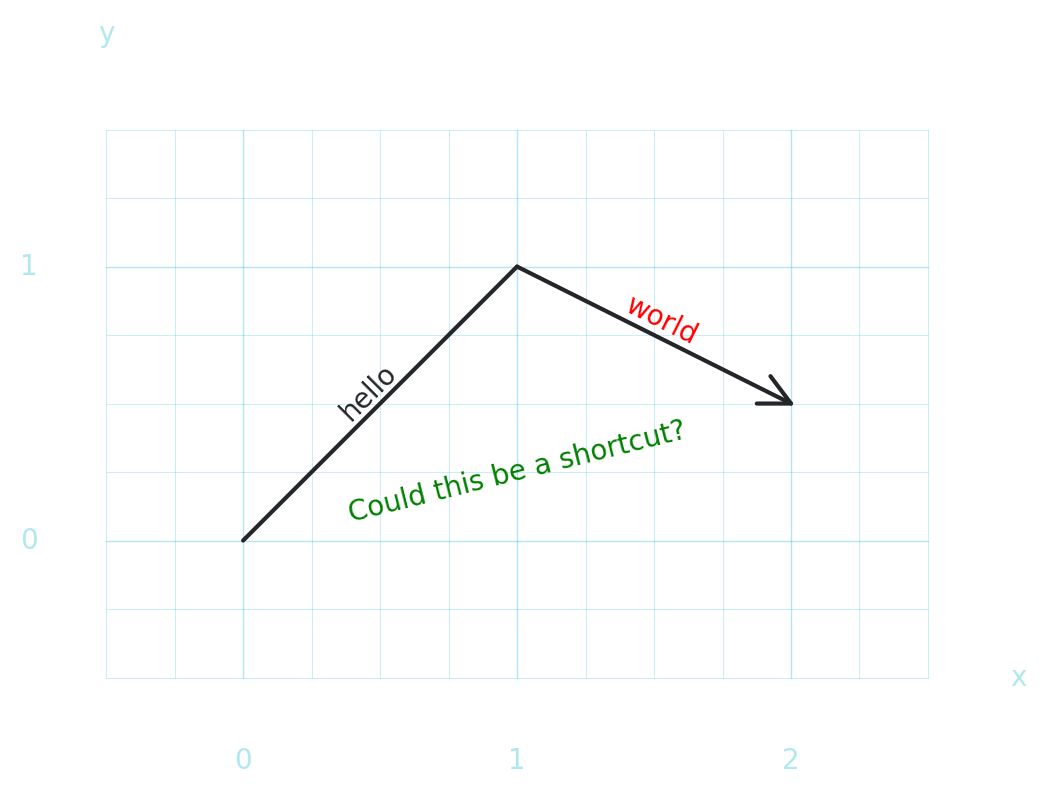
You can easily add text and arrows along lines:
d = robodraw.Drawing()

pa, pb, pc = (0, 0), (1, 1), (2, 0.5)

d.line(pa, pb, text="hello\n")
d.line(
    pb, pc, text=dict(text="world\n", color="red"), arrowhead=dict(center=1)
)

# calling `line` with `text=` is a shortcut for `text_between`
d.text_between(pa, pc, "Could this be a shortcut?", color="green")
d.grid()
Curves
If you want a line to pass through multiple points, you can use
Drawing.curve to draw a smooth curve.
d = robodraw.Drawing()

d.curve(
    [(0, 0), (1, 1), (2.5, 0.5), (3.5, 1.5)],
    linestyle="-.",
    linewidth=5,
)

# you can draw just the arrowhead separately
d.arrowhead((1, 1), (2.5, 0.5), linewidth=5, width=0.15)

d.grid()
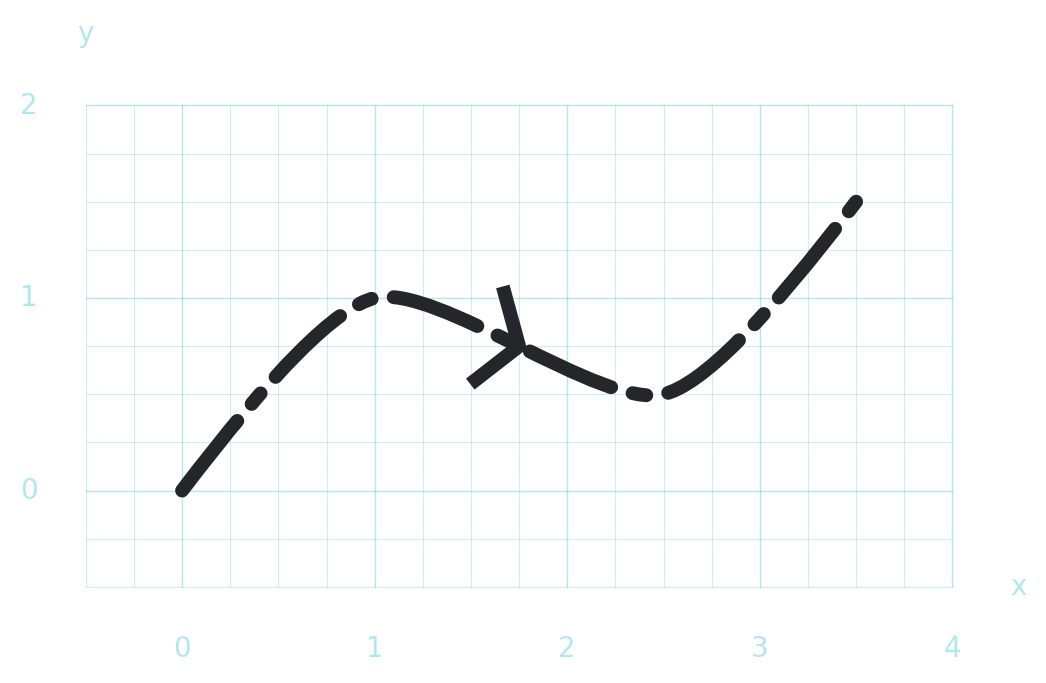
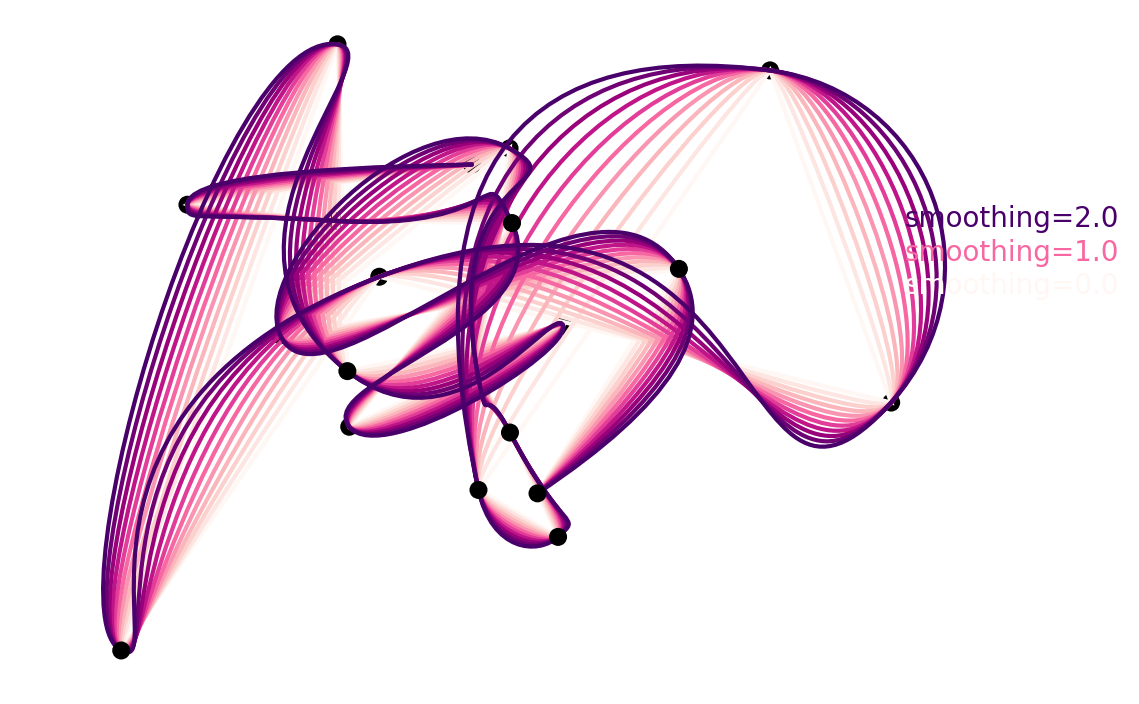
Curves pass exactly through all points given, with the smoothing kwarg controlling… how smoothly they do this.
import matplotlib as mpl

d = robodraw.Drawing()

rng = np.random.default_rng(1)
pts = rng.normal(size=(20, 3))
cm = mpl.colormaps.get_cmap("RdPu")

for pt in pts:
    d.dot(pt, color="black", radius=0.05)

for smoothing in np.linspace(0.0, 2.0, 11):
    d.curve(pts, smoothing=smoothing, color=cm(smoothing / 2))

d.label_ax(1.0, 0.60, "smoothing=0.0", color=cm(0.0))
d.label_ax(1.0, 0.65, "smoothing=1.0", color=cm(0.5))
d.label_ax(1.0, 0.70, "smoothing=2.0", color=cm(1.0))
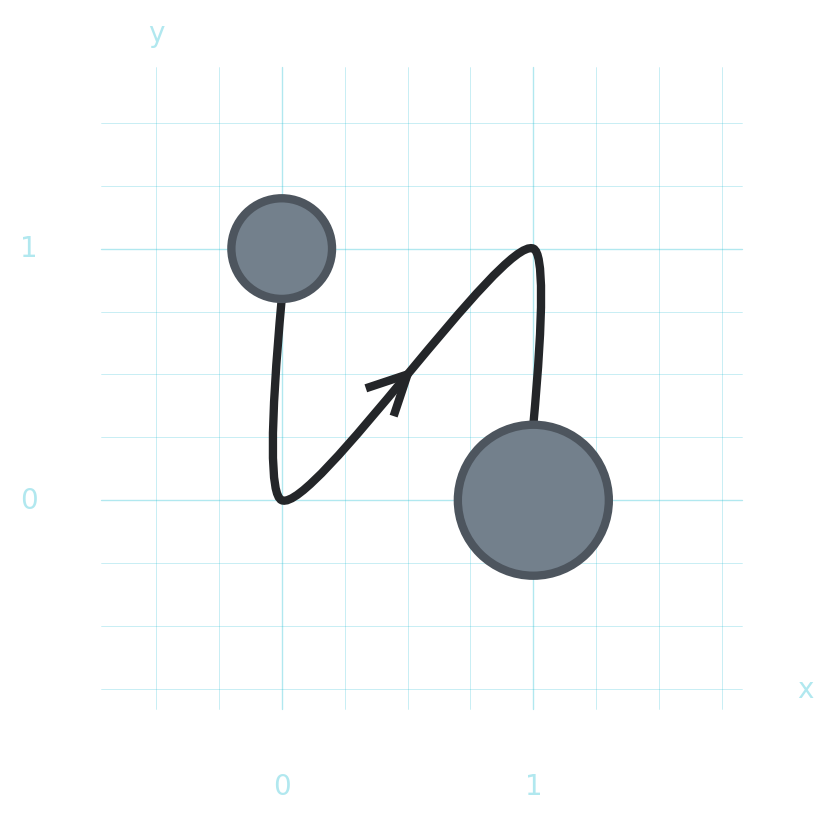
Drawing.curve also takes the shorten kwarg which shortens the final segments by the specified absolute amount:
d = robodraw.Drawing()

r1 = 0.2
r2 = 0.3

d.circle((0, 1), radius=r1, linewidth=3)
d.curve([(0, 1), (0, 0), (1, 1), (1, 0)], shorten=(r1, r2), linewidth=3)
# also add an arrow on the middle segment
d.arrowhead((0, 0), (1, 1), linewidth=3)
d.circle((1, 0), radius=r2, linewidth=3)
d.grid()
Bezier
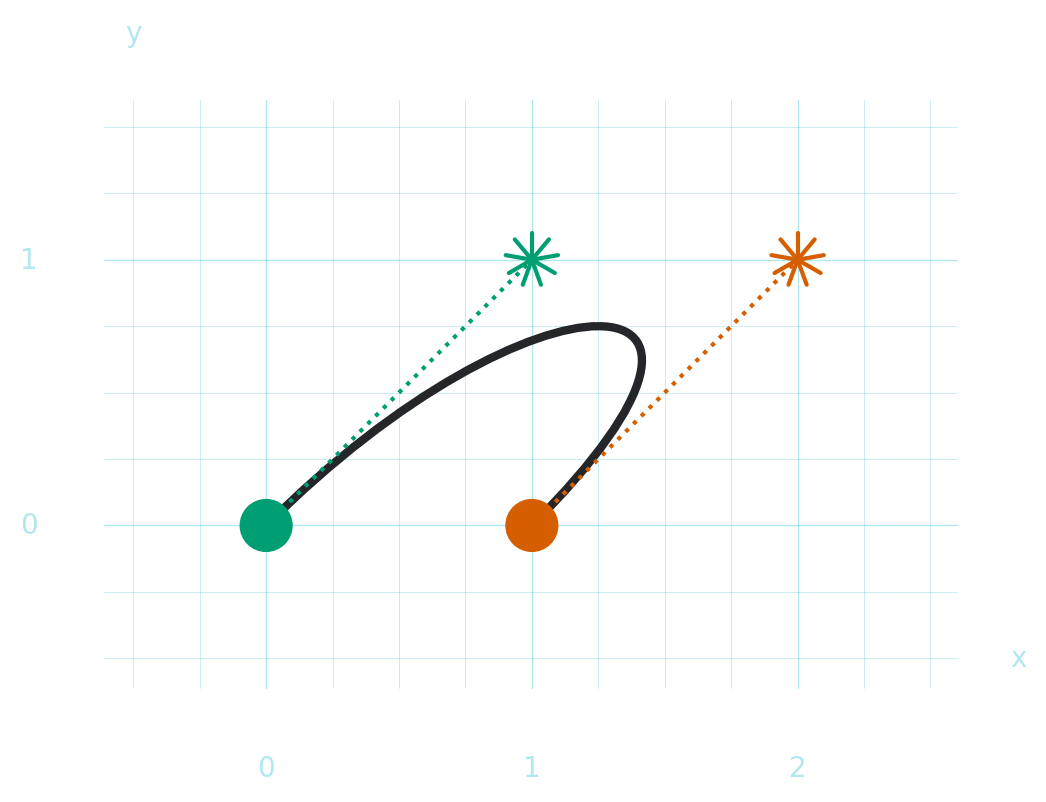
If you want to draw a bezier curve by explicitly passing both the coordinates and the anchor points you can use Drawing.bezier:
d = robodraw.Drawing()

cooa = (0, 0)
anca = (1, 1)
ancb = (2, 1)
coob = (1, 0)

d.bezier([cooa, anca, ancb, coob], linewidth=3)

d.dot(cooa, color=robodraw.get_color("green"))
d.star(anca, color=robodraw.get_color("green"))
d.line(cooa, anca, linestyle=":", color=robodraw.get_color("green"))

d.dot(coob, color=robodraw.get_color("red"))
d.star(ancb, color=robodraw.get_color("red"))
d.line(coob, ancb, linestyle=":", color=robodraw.get_color("red"))
d.grid()
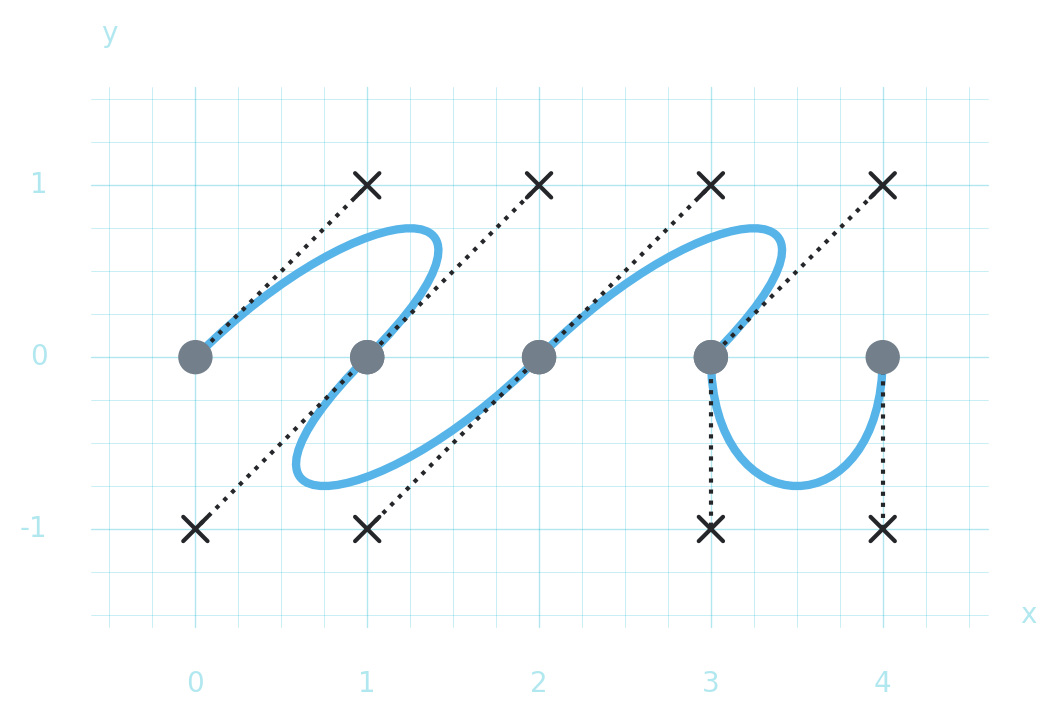
You can supply any sequence of length 3N + 1 to draw a continuous line:
d = robodraw.Drawing()

coos = [
    (0, 0),
    (1, 1),
    (2, 1),  # control points
    (1, 0),
    (0, -1),
    (1, -1),  # control points
    (2, 0),
    (3, 1),
    (4, 1),  # control points
    (3, 0),
    (3, -1),
    (4, -1),  # control points
    (4, 0),
]
d.bezier(coos, linewidth=3, color=robodraw.get_color("blue"))

for i in range(0, len(coos) - 1, 3):
    d.dot(coos[i])
    d.dot(coos[i + 3])
    d.cross(coos[i + 1])
    d.cross(coos[i + 2])
    d.line(coos[i], coos[i + 1], linestyle=":")
    d.line(coos[i + 2], coos[i + 3], linestyle=":")

d.grid()
Multi-edges
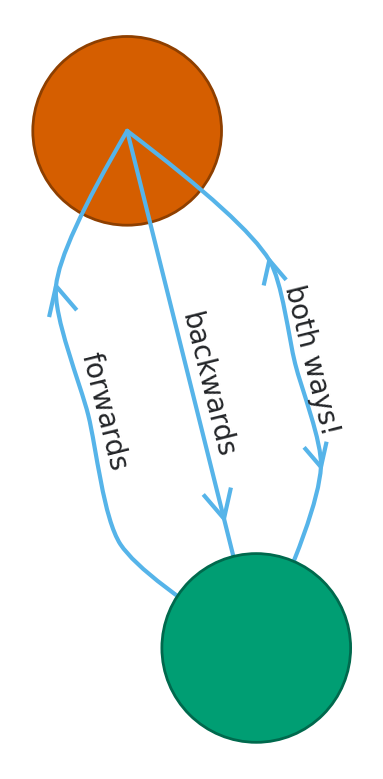
If you want to programmatically draw multiple lines from one place to the other (‘multi-edges’) you can use Drawing.line_offset:
d = robodraw.Drawing()

pa, pb = (0, 0, 0), (0, 1, 1)

green = robodraw.get_color("green")
red = robodraw.get_color("red")
blue = robodraw.get_color("blue")

d.circle(pa, color=green)
d.circle(pb, color=red)

# you can still use arrowheads and text labels
d.line_offset(
    pa, pb, 0.2, arrowhead=dict(center=0.9), text="forwards\n", color=blue
)
d.line_offset(
    pa,
    pb,
    0.0,
    arrowhead=dict(center=0.9, reverse=True),
    text="backwards\n",
    color=blue,
)
d.line_offset(
    pa,
    pb,
    -0.2,
    arrowhead=dict(center=0.9, reverse="both"),
    text="both ways!\n",
    color=blue,
    midlength=0.4,
)
zigzags
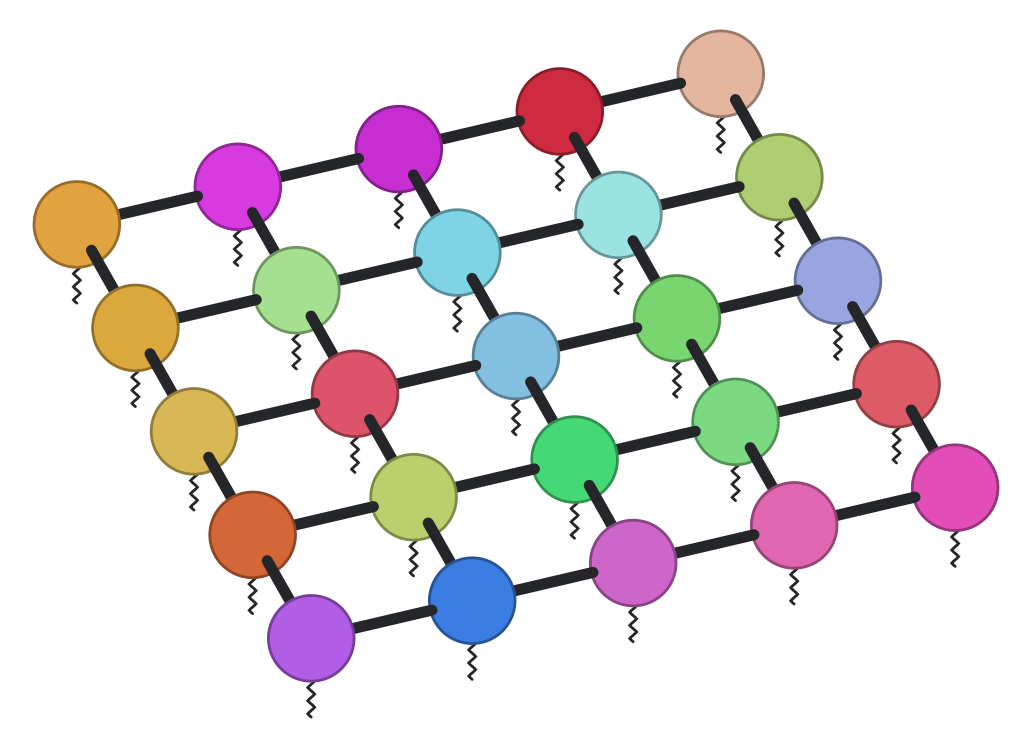
Drawing.zigzag is similar to Drawing.line, but creates a zigzag pattern instead of a straight line, which can be useful to differentiate beyond linestyle.
d = robodraw.Drawing()

for i in range(5):
    for j in range(5):
        d.circle((i, j, 1), color=robodraw.hash_to_color(str((i, j))))
        if i < 4:
            d.line((i, j, 1), (i + 1, j, 1), linewidth=4, shorten=0.25)
        if j < 4:
            d.line((i, j, 1), (i, j + 1, 1), linewidth=4, shorten=0.25)

        d.zigzag((i, j, 1), (i, j, 0.4), linewidth=1, width=0.02)
You can control:
smoothing: how smooth the zigzagging is (0 = sharp corners, 1 = very smooth)extend: only start zigzagging after this lengthwidth: the width of the zigzag line, by default aims for 8 zigzags
d = robodraw.Drawing()
d.zigzag((0, 0), (2, 0), smoothing=0.0, extend=0.3, width=0.03)

Highlighting areas and groups of objects
Patches around general areas
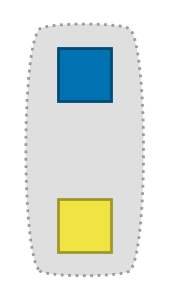
In technical drawings it is often useful to highlight areas. The
Drawing.patch method does this by filling in
a curve, given by a sequence of 2D or 3D coordinates.
d = robodraw.Drawing()

d.marker((0, 0), marker="s", color=robodraw.get_color("yellow"))
d.marker((0, 1), marker="s", color=robodraw.get_color("bluedark"))
d.patch(
    [
        (-0.3, -0.3),
        (+0.3, -0.3),
        (+0.3, +1.3),
        (-0.3, +1.3),
    ],
    smoothing=0.3,
)
d.scale_figsize()
Patches around two circles
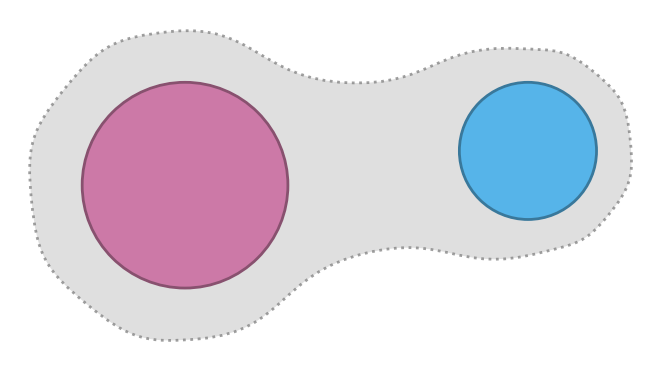
If you want to specifically highlight two circles, you can use
Drawing.patch_around_circles,
and simply specify the two circles by their center coordinates and radii.
d = robodraw.Drawing(figsize=(4, 4))

d.circle((0, 0), radius=3, color=robodraw.get_color("pink"))
d.circle((10, 1), radius=2, color=robodraw.get_color("blue"))

d.patch_around_circles(
    (0, 0),
    3,
    (10, 1),
    2,
    padding=0.5,
)
Patches around arbitrary collections of objects
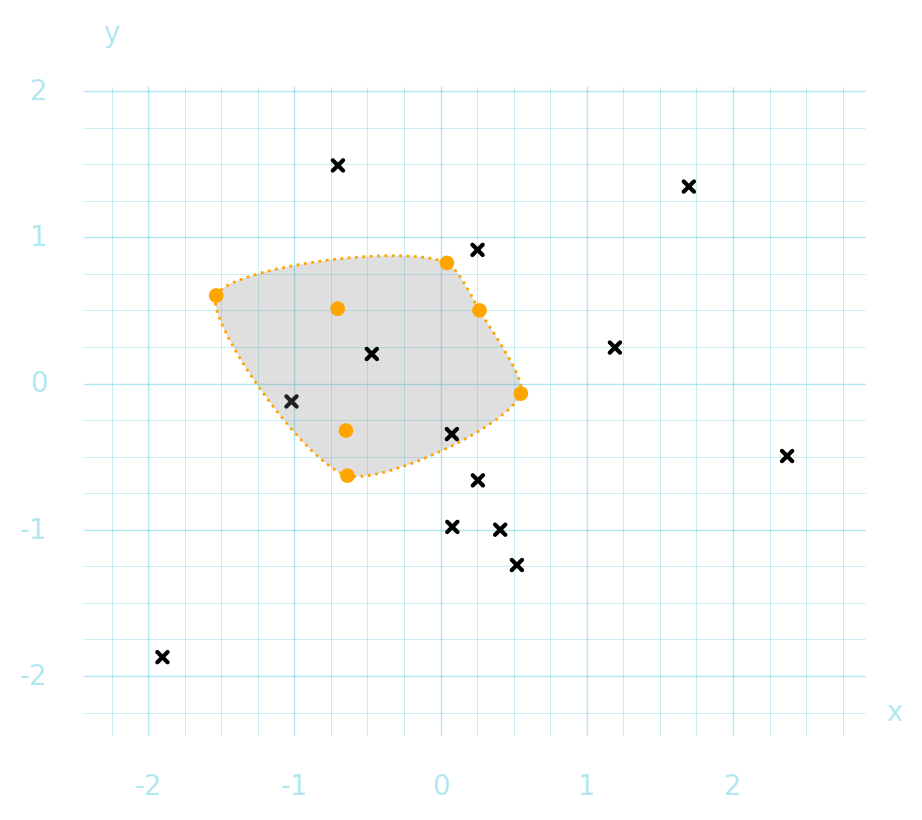
If you want to highlight an arbitrary collection of objects, you can call
Drawing.patch_around, this computes
the convex hull of the objects and draws a patch around it.
d = robodraw.Drawing()

for pt in pts[:7]:
    d.dot(pt, color="orange", radius=0.05)
for pt in pts[7:]:
    d.cross(pt, color="black", radius=0.05)

d.patch_around(pts[:7], edgecolor="orange")
d.grid()
You can control how much padding is added around the perimeter of the objects
using the radius kwarg.
d = robodraw.Drawing()

for k, pt in enumerate(pts):
    d.dot(pt, color=robodraw.hash_to_color(str(k)), radius=0.05)

for k in range(1, len(pts)):
    d.patch_around(
        pts[:k],
        radius=0.05 * k,
        facecolor=robodraw.hash_to_color(str(k - 1)),
        linestyle="-",
        zorder=-k,
        alpha=0.5,
    )